
At Quickwin Casino we think that knowing exactly how each bet functions is the surest route to improved decisions and read more consistent results. This guide explains the nine most common bet categories you will meet on our platform, explaining their mechanics, payout structures, and the real choices you encounter when you put them. By the end you will grasp the differences between single-wager formats and multi-leg combinations, how house-edge percentages change with each option, and what to expect when you submit a stake in your account balance.
Internal Bets versus Outside Bets on the Roulette Wheel
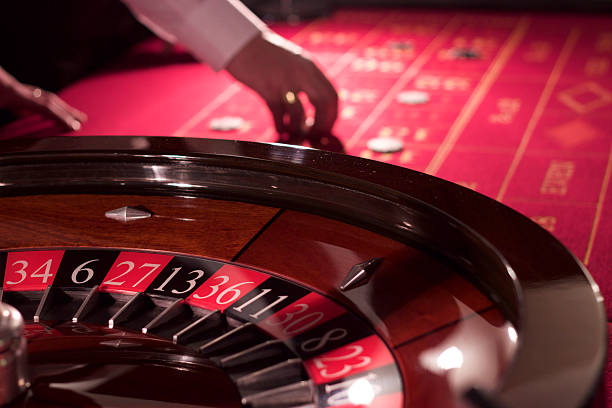
European roulette game at Quickwin Casino showcases two distinct categories of wagers that contrast markedly in both payoff and likelihood. Inside wagers are located on any individual digit or tiny cluster of digits on the grid, offering the highest payouts but the lowest success rate. A direct straight bet pays 35 to 1, yet its likelihood of hitting on a 37-pocket wheel is 2.70 per cent. Corner bets covering four adjacent numbers pay 8 to 1, while six-line bets pay 5 to 1. Outside bets, by contrast, span eighteen slots or additional and hence hit roughly one time every two turns. Even-money wagers on red or black, odd or even, and high/low each pay 1 to 1, and the column or dozen bets payout 2 to 1. Since the casino advantage stays fixed at 2.70 percent on every outside bet, gamblers often use them to lengthen playing time when they desire more gradual money flow. Selecting between the two groups therefore boils down to whether you prefer sporadic large winnings or more consistent, lower rewards.
Interior Bets on Single-0 and Double-Zero Wheels
Quickwin Casino features both single-zero and double-zero roulette variants, and the extra zero on the American wheel increases the house edge from 2.70 percent to 5.26 percent on every bet. Inside bets on the double-zero wheel therefore need larger sample sizes before the expected value becomes visible. A straight-up number still pays 35 to 1, but its probability drops from 2.70 percent to 2.63 percent. Five-number bets covering 0, 00, 1, 2, and 3 pay 6 to 1 yet carry a 7.89 percent house edge, making them the statistically weakest inside option. When you open the game lobby you can filter tables by wheel type so that you can stay on the single-zero variant whenever you want the lower house edge. The platform also records the last one hundred spins for each table, giving you a transparent data set you can review before you decide whether to chase recent clusters or to spread your wagers across larger sections of the layout.
Position Bets versus Commission Bets in Craps
Number bets and commission bets both let you to stake that a particular point number will come up before a seven, yet they differ in commission structure and payout. A Place on Six or Place Eight pays 7 to 6 with no upfront commission, generating a 1.52 percent house edge. Buy bets on the very numbers pay true odds of 6 to 5 but levy a five percent commission on the stake, pushing the house edge to 4.76 percent. Quickwin Casino reveals the commission amount in the bet slip before you confirm, so you can contrast the net payout of each format. Because the Place bet bypasses the commission, it is generally the better choice for numbers six and eight, while Buy bets become mathematically preferable only on four and ten where the true-odds payout is 2 to 1. Gamblers who desire to simplify this decision can turn on the “smart bet” toggle in the craps settings panel, which automatically picks the lower house-edge option based on the chosen point.
Odds Bets and Their Nil House Edge
Odds bets lie behind a Pass Line or Come bet and pay out true odds with no house edge, effectively cutting the combined house edge of the two wagers. On a point of six or eight the free odds return 6 to 5; on five or nine they pay 3 to 2; on four or ten they pay out 2 to 1. Because the casino earns nothing on the odds portion, many players boost their odds stake to the maximum allowed multiple, often 3-4-5 times the original Pass Line amount. Quickwin Casino displays the current maximum odds multiple directly above the odds button so you can modify your total exposure without leaving the table. The zero house edge is valid only to the odds wager itself; the Pass Line or Come bet still carries its standard 1.41 percent edge, so the combined return stays slightly negative yet measurably better than betting without odds.
Within Number Bets on Three-Reel Slot Machines
Three-reel classic slots at Quickwin Casino employ fixed paylines and predetermined reel strips, so each symbol combination carries a calculable frequency. A single-line bet on the center row pays the posted line award, while activating all three lines boosts the total stake by three but does not change the symbol distribution. Progressive jackpots on these titles are funded by a small percentage of each stake, and the current meter value shows above the reels so you may observe the exact amount that is paid if the top symbol combination appears. Because the reels stop in a predetermined order, the outcome of each spin does not depend of previous results, and the random number generator rotates through millions of positions per second. Players who want to verify fairness are able to get the certified RNG report from the game information panel, which shows the tested return-to-player percentage for every available denomination.
Player’s and The banker Hands in Baccarat
Baccarat resolves around two hands whose total values are calculated modulo ten, and the three core bets each have different house edges. The Banker bet returns 19 to 20 after a five percent commission, giving a house edge of 1.06 percent. The Player bet pays even money and carries a slightly higher edge of 1.24 percent. The Tie bet, which pays 8 to 1, sits at 14.36 percent because ties happen only 9.52 percent of the time. Quickwin Casino shows commission totals in real time within the cashier so you can view exactly how much has been deducted before you withdraw. Side bets such as “Player Pair” or “Banker Pair” offer en.as.com 11 to 1 but show up only on the first two cards of each hand, and their 11.25 percent house edge renders optional extras rather than core strategy components. Knowing these percentages enables you determine whether to stick with the Banker bet throughout a shoe or to alternate between Player and Banker when the displayed shoe history reveals runs.
Hard-way and Proposition-style Bets on the Craps Table
Prop wagers are positioned in the center of the craps layout and return between 4 to 1 and 30 to 1, yet each one carries a house edge over 9 percent. A Hard Four or Hardway Ten returns 7 to 1 and is won only when two twos or two fives appear before an easy-way four or non-hard ten or a seven. The Seven bet payouts 4 to 1 but loses on every outcome except seven, which appears once every six rolls on average. Quickwin Casino displays the exact payout multiplier next to each prop button so you can evaluate return-to-player percentages at a glance. Because these wagers conclude on the following roll, they draw in players who seek immediate feedback rather than multi-roll sequences. However, the increased house edges mean that frequent use will hasten bankroll depletion, so most experienced players cap prop bets to a fixed percentage of their session budget.
Pass-line and Come Bets in Craps
Craps features two foundational wagers that share identical 1.41 percent house edges yet function on different timing within the current round. The Pass Line bet is placed before the come-out roll; if the shooter rolls a seven or eleven you win instantly, while a two, three, or twelve produces an instant loss. Any other total becomes the point, and you win only when that point repeats before a seven appears. The Come bet follows the same rules but can be set on any roll after the point is set, in effect creating a second distinct Pass Line wager within the identical sequence. Because each bet concludes on its own schedule, many players combine both to boost the number of decision points per hour. Quickwin Casino shows the current point visibly on screen and provides an extra “mini history” panel that logs the last twenty rolls, allowing you to confirm that the random number generator corresponds to the shown outcomes before you set additional wagers.
Parlay and System Bets in Wagering Sections
Accumulator bets join three or more separate selections into a one wager where the payout increases the odds of each leg. A four-fold accumulator with average decimal odds of 2.00 pays 16.00 if all four selections win, yet any single loss invalidates the entire ticket. System bets such as Trixie or Patent reduce this risk by creating multiple smaller accumulators from the same selections. Quickwin Casino shows the exact number of lines and the total stake for each system option before you submit the bet, so you can assess potential returns against the probability of at least one leg losing. Cash-out functionality is offered on most pre-match and live accumulators, allowing you to secure a partial profit or limit losses before all legs have resolved. The platform also logs the average return rate of your past accumulator tickets, providing you a personal performance metric you can review when you prepare future selections.
Coverage and Even-Money Offers Propositions in 21
When the house’s upcard is an ace, Quickwin Casino provides an insurance side bet that pays 2 to 1 if the dealer holds a ten-value hole card. The insurance stake has a house edge of 7.69 percent because the dealer will have blackjack only 30.77 percent of the time. Even-money is an automatic insurance for players holding blackjack, securing a 1 to 1 payout instead of chancing a push if the dealer also holds blackjack. The decision panel presents both options together so you can pick within the fifteen-second timer. Players who track cards sometimes modify their insurance rate based on the remaining deck composition, and the on-screen running count tool refreshes after every hand so you can follow the ratio of high to low cards without external aids. Because the insurance bet settles immediately after the dealer verifies for blackjack, it provides a quick data point you can utilize to reset your session budget before the next round begins.
Standard Bankroll Rules for Each Bet Type
Winning players handle bankroll management as a set operating procedure rather than an afterthought. We recommend dividing your total deposit into session units of no more than five percent, then subdividing each unit into smaller portions that match the house edge of the chosen bet. Inside roulette bets, for example, consume units faster than outside bets, so we assign them a smaller slice of the session budget. Craps place bets and baccarat banker bets get larger slices because their lower edges stretch the same unit across more decisions. Quickwin Casino lets you set automatic stop-loss and stop-win limits in the account panel, pausing play once either threshold is reached. Reviewing the session log afterward shows exactly how each bet type affected the unit count, giving you concrete data for the next deposit cycle.
- Record every stake and result in the downloadable CSV report.
- Change unit size only after a minimum of one hundred resolved bets.
- Avoid increase stake size to recover prior losses within the same session.